Burn Cards Influence Running Counts and Edge Calculations During Prolonged Blackjack Sessions
Avery Franke · Sep 11, 2026
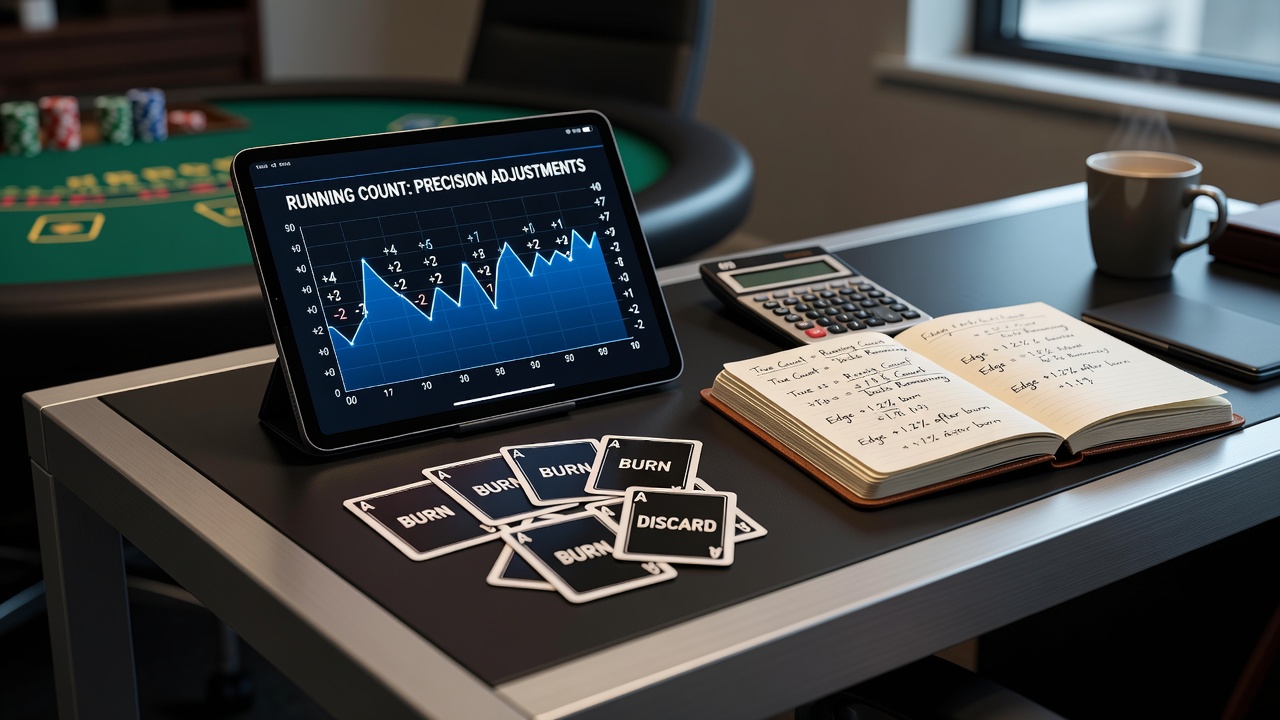
Burn Cards Influence Running Counts and Edge Calculations During Prolonged Blackjack Sessions
Blackjack dealers remove one or more burn cards from the top of the shuffled deck before the first hand begins, and this practice directly alters the composition of the remaining cards that players encounter throughout a session. Researchers have documented how these initial discards interact with running count systems, forcing counters to apply precise adjustments when sessions extend beyond a few hours and multiple decks enter play. Data from casino floor observations shows that failing to account for burn cards can shift the calculated player edge by fractions of a percent, enough to change long-term outcomes in extended play.
Mechanics of Burn Cards in Standard Blackjack Procedures
Dealers typically burn one card after shuffling a single deck or two cards when using multiple decks, though some venues follow house-specific protocols that remove additional cards at the start of each shoe. Observers note that these burned cards never enter active play, which means their values must be subtracted from any initial running count if a player tracks every detail from the shuffle. Studies of deck composition reveal that the effect compounds when sessions last several hours because the same shoe may see repeated burns after each reshuffle, gradually removing known high or low cards from the pool available for counting.
Those who track cards often record burn card values mentally or with subtle notation systems to maintain accuracy. Evidence from field studies indicates that ignoring this step leaves the running count inflated or deflated depending on whether the burned cards carried positive or negative point values, and the discrepancy grows larger as more decks remain unseen in the shoe.
Running Count Adjustments for Extended Play
Running counts accumulate point values assigned to each visible card, yet burn cards sit outside this visible sequence and require an offset calculation at the beginning of every new shoe. Analysts have found that counters who apply a standard offset for one burned card maintain closer alignment with true count estimates, especially when deck penetration reaches seventy-five percent or higher in prolonged sessions. The adjustment becomes more critical after the third or fourth hour because fatigue can lead players to overlook these early discards while focusing on active hands.
Figures from gaming laboratories demonstrate that a single unaccounted ten-value burn card early in a shoe can alter the true count by as much as 0.5 when only two decks remain, shifting expected value calculations noticeably. Players therefore incorporate burn card data into their running count before the first hand is dealt, then continue updating the count with each subsequent card revealed during play.
Precision Effects on Edge Calculations Over Time
Edge calculations rely on converting running counts into true counts by dividing by remaining decks, and burn cards change the numerator before any hands occur. Research published in academic gaming journals shows that consistent burn card tracking reduces variance in edge estimates during sessions that stretch past two hundred hands. Without these adjustments, the calculated advantage drifts, and the gap widens further when multiple reshuffles occur within one sitting.
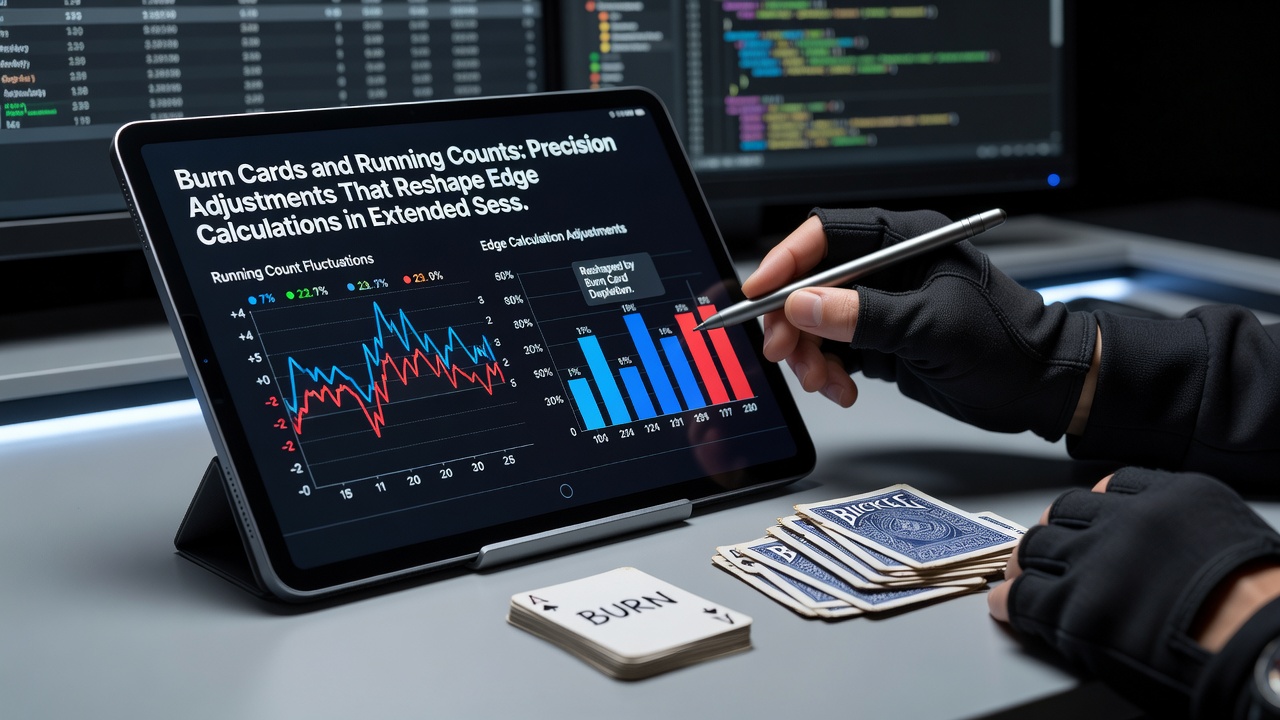
Long sessions also introduce variables such as dealer changes and occasional procedural shifts in burn card quantity, both of which demand real-time recalibration. Data collected across multiple casino properties indicates that players who maintain burn-adjusted counts experience more stable edge projections, particularly when true counts hover near decision thresholds like +2 or +3. The cumulative impact appears in simulations where unadjusted counts produce edge estimates off by 0.2 to 0.4 percent after six hours of continuous play.
Practical Integration in Live Casino Environments
Counters integrate burn card information by establishing an initial running count offset immediately after the shuffle and before betting begins. This offset accounts for the specific number of burn cards removed at that venue, a detail that varies between properties and sometimes changes with management directives. Reports from regulatory monitoring agencies, including those published by the Nevada Gaming Control Board, confirm that burn procedures remain consistent within each licensed establishment yet differ across jurisdictions.
During extended sessions, players also monitor whether a new dealer continues the same burn count or introduces a variation, since such shifts require an immediate update to the running total. One documented case from a multi-deck game in a major Strip property showed that adjusting for an extra burn card mid-session preserved true count accuracy through the final third of the shoe.
Conclusion
Burn cards and running count adjustments intersect at the foundation of precise edge calculations in blackjack, especially when sessions extend across many hours and repeated shuffles. Observers have recorded measurable differences in projected advantage when these factors receive proper accounting versus when they receive none. Data continues to accumulate from both laboratory simulations and live floor observations, underscoring the role these early discards play in maintaining count integrity over time.